What Is Contract Automation?
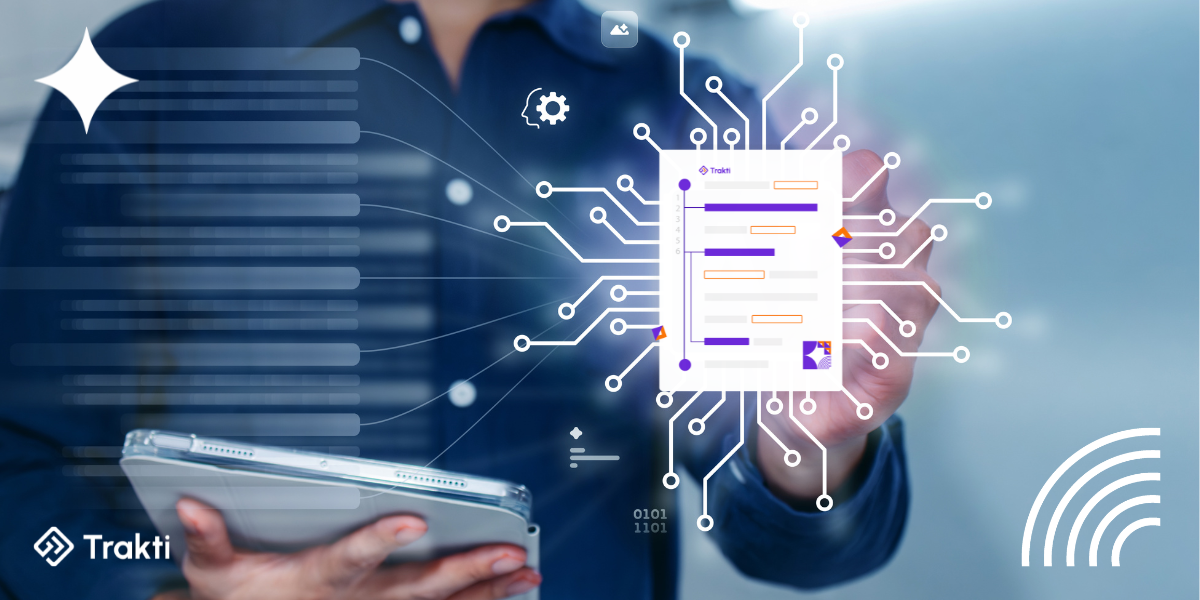
Contract automation is the use of technology to handle the creation, negotiation, approval, execution, and management of contracts — replacing manual, paper-based processes with digital workflows.
But here’s what most definitions leave out: true contract automation doesn’t stop at the signature.
Traditional contract automation tools focus on the pre-signature phase — templating, drafting, reviewing, approving, and signing. That’s important. But the most expensive contract problems happen after the ink dries: missed obligations, late payments, manual compliance checks, and disputes over what was agreed.
A new category — Smart Contract Lifecycle Management (SCLM) — extends automation to the entire contract lifecycle, including self-executing obligations, automated payments, and blockchain-verified audit trails. This is where contract automation delivers its biggest ROI.
The Real Cost of Manual Contract Management
The numbers are stark. According to World Commerce & Contracting:
9.2% of annual revenue is lost to ineffective contract management — rising to 15% for larger organisations
Only 8% of companies have invested in integrated contract management capabilities (WorldCC 2024)
The average enterprise manages 20,000–40,000 active contracts at any given time
Where does the money go? Not where you’d expect. The biggest losses don’t come from slow drafting or clunky approvals. They come from:
- Missed renewal dates that auto-renew unfavourable terms
- Untracked obligations that trigger penalties or failed SLAs
- Manual payment processing that delays revenue recognition
- Compliance gaps that lead to audit failures and regulatory fines
- Disputes over what was executed versus what was agreed
In other words, the real cost of poor contract management is what happens after the contract is signed — precisely where most automation tools stop working.
7 Benefits of Contract Automation
- Faster Contract Cycles
Automated workflows replace email chains and manual handoffs. The impact is measurable: organisations using contract automation report 80% reduction in turnaround time and 30–50% faster approval cycles.
For procurement teams running tenders and RFP/RFQ processes, this means moving from weeks of back-and-forth to structured, parallel negotiations — all tracked in one system. - Fewer Errors, Lower Risk
Every manual touchpoint is a risk. Incorrect terms, outdated clauses, missing approvals — these errors compound across thousands of contracts. Automation enforces standardised templates, pre-approved language, and mandatory approval gates.
The result: fewer errors in contract creation and — critically — fewer disputes downstream because the terms are clear, consistent, and traceable. - Better Compliance and Audit Readiness
Regulated industries face growing pressure: DORA for financial services, eIDAS for digital signatures, GDPR for data processing agreements. Manual contract processes create compliance gaps that are invisible until an auditor finds them.
Contract automation creates a complete audit trail of every action — who approved what, when, and what changed. But there’s a critical distinction here: a database log can be edited. A blockchain-notarised record cannot. For industries where non-repudiation matters, the difference is regulatory survival. - Cost Savings at Scale
Automating contract management when dealing with high contract volumes means you don’t need extra headcount for every new client or supplier. The operational savings are significant: 30% average cost reduction according to industry benchmarks.
But the bigger saving is the 9.2% revenue leakage you stop. For a company doing €50M in revenue, that’s €4.6M recovered annually — not through cost-cutting, but through better contract execution. - Scalability Without Headcount
A legal team of five can manage 500 contracts manually. But what about 5,000? Or 50,000? Without automation, every increase in contract volume requires proportional headcount increases.
Contract automation breaks this linear relationship. Templates, workflows, and automated approvals mean the same team can handle 10x the volume — while maintaining quality and compliance. - Self-Executing Obligations
This is where traditional CLM tools stop — and where the real value begins.
Most contract automation platforms help you sign faster. But the signed contract then sits in a repository, and humans are responsible for tracking obligations, processing payments, and enforcing terms.
Self-executing smart contracts change this fundamentally. Once signed, the contract’s obligations execute automatically based on predefined conditions:- A payment triggers when a delivery is confirmed
- A refund processes instantly when a service level is breached
- A penalty applies automatically when a deadline is missed
- A renewal initiates 90 days before expiration with updated terms
- A payment triggers when a delivery is confirmed
- A refund processes instantly when a service level is breached
- A penalty applies automatically when a deadline is missed
- A renewal initiates 90 days before expiration with updated terms
No human intervention. No missed deadlines. No “I forgot to process that invoice.” The contract does what it says it will do.
This isn’t theoretical. Italy’s national railway, Trenitalia, uses this approach to process millions of instant, automated refunds to passengers when trains are delayed — without a single manual touchpoint.
- Immutable Proof with Blockchain
Standard contract management tools store records in databases. Databases can be edited, altered, or corrupted. In a dispute or audit, a database log is only as credible as the organisation that controls it.
Blockchain notarisation creates a fundamentally different kind of record:
Tamper-proof: Every contract action is cryptographically timestamped on the blockchain
Non-repudiable: Neither party can deny what was agreed or when
Independently verifiable: Auditors and regulators can verify records without relying on the contracting parties
Permanent: Records cannot be deleted, altered, or lost
For DORA compliance in financial services, eIDAS-standard digital signatures, or any context where the integrity of the contract record matters, blockchain-backed automation isn’t a feature — it’s a requirement.
What Most CLM Tools Miss: Life After the Signature
Here’s an uncomfortable truth about the contract automation market: almost every CLM platform focuses on the same 50% of the problem.
Juro helps you draft and sign faster. Ironclad streamlines legal workflows. Icertis adds AI-powered contract intelligence. SpotDraft offers a friendly co-pilot for your legal team. DocuSign extends e-signature into lifecycle management.
They’re all good at what they do. But they all share the same blind spot: once the contract is signed, the automation stops.
The contract goes into a repository. Someone sets a calendar reminder for the renewal date. Finance manually processes the payments. Compliance manually checks the obligations. And when something goes wrong — a missed SLA, a late payment, a disputed term — humans scramble to figure out what happened.
This is where the 9.2% revenue leakage lives.
Smart Contract Lifecycle Management (SCLM) fills this gap. It extends automation beyond the signature to cover:
- Obligation management: Contract terms that monitor and enforce themselves
- Payment automation: Transactions triggered by contract conditions, not manual approvals
- Compliance verification: Continuous, blockchain-backed proof that terms are being met
- Vendor performance tracking: Automated scoring based on actual contract execution, not self-reported data
The difference isn’t incremental. It’s a different category of automation — one where contracts don’t just get managed, they get executed.
Case Study: How Trenitalia Automates Millions of Refunds
The most compelling proof of post-signature contract automation comes from Italy’s largest railway operator.
The problem: Trenitalia needed to refund passengers for train delays. The manual process involved verifying travel data, processing claims, approving refunds, and distributing payments — taking days or weeks per refund, across millions of passengers.
The solution: Using Trakti’s Smart Contract Lifecycle Management platform for Smart Refund — a system where:
- Train delay data is automatically captured and certified on the Ethereum blockchain
- Smart contract logic evaluates each delay against the refund policy
- Eligible refunds are calculated and paid instantly — no human intervention
- Every transaction is recorded on an immutable, auditable ledger
The result:
- Refund processing: from days to minutes
- Manual touchpoints: from 6–8 to zero
- Processing cost per refund: 94% reduction
- Annual refund volume: 1+ million, fully automated
The project won the INATBA Award (International Association for Trusted Blockchain Applications) for best project — validation that self-executing contracts work at enterprise scale.
“Thanks to the collaboration with startup Trakti, Trenitalia has created Smart Refund, the new instant refund system.”
Trenitalia
Why this matters for your organisation: If contract automation can handle millions of instant financial transactions for Italy’s national railway, it can handle your vendor payments, SLA monitoring, and compliance obligations.
→ Ask the full Trenitalia case study
→ Book a demo to see Trakti in action
How to Choose Contract Automation Software
Not all contract automation platforms are equal. Here’s a checklist for evaluating solutions:
Table stakes (every modern CLM should have these):
✅ Template authoring with variables and clauses
✅ Approval workflows with role-based access
✅ E-signature integration (eIDAS-compliant for Europe)
✅ Version control and audit trail
✅ API integration with CRM/ERP systems
✅ No-code configuration (business users, not developers)
Differentiators (what separates good from transformational):
✅ Multi-protocol negotiation (auctions, tenders, RFP/RFQ, bargaining — not just redlining)
✅ Self-executing obligations (contracts that enforce themselves post-signature)
✅ Automated payment processing (triggered by contract conditions)
✅ Blockchain notarisation (immutable, tamper-proof records)
✅ KYC/AML integration (identity verification built into the workflow)
✅ DORA / eIDAS / GDPR compliance by design
Questions to ask vendors:
“What happens to the contract after it’s signed in your platform?”
“Can contract obligations trigger actions automatically, or do humans need to intervene?”
“Is your audit trail editable, or is it cryptographically immutable?”
“Can your platform handle multi-protocol negotiations, or only basic redlining?”
The answers will tell you whether you’re looking at a signing tool or a true contract automation platform.
FAQ: Contract Automation
What is contract automation?
Contract automation is the use of technology to digitise and streamline the creation, negotiation, approval, execution, and management of contracts. It replaces manual processes like email-based approvals, paper signatures, and spreadsheet tracking with automated workflows. Advanced contract automation also includes self-executing smart contracts that enforce obligations and process payments automatically after signing.
The primary benefits include faster contract cycles (up to 80% reduction in turnaround time), fewer errors through standardised templates, better compliance with automated audit trails, and significant cost savings (organisations lose an average of 9.2% of revenue to poor contract management). The most advanced benefit is self-executing contracts that automate obligation management, payments, and compliance verification post-signature.
A self-executing contract is a digital agreement where the terms are encoded as logic that executes automatically when predefined conditions are met. For example, a payment triggers automatically when a delivery is confirmed, or a refund processes instantly when a service level is breached. Unlike traditional contracts that require human intervention to enforce, self-executing contracts operate autonomously using blockchain-based smart contract technology.
Blockchain provides three critical advantages for contract management: immutability (records cannot be altered or deleted), non-repudiation (neither party can deny what was agreed), and independent verifiability (auditors can verify records without relying on the contracting parties). This makes blockchain-backed contracts fundamentally more trustworthy than traditional database-stored records, which is especially important for regulatory compliance (DORA, eIDAS) and dispute resolution.
CLM (Contract Lifecycle Management) covers the pre-signature phase: creating, reviewing, approving, and signing contracts. SCLM (Smart Contract Lifecycle Management) extends this to include the post-signature phase: self-executing obligations, automated payments, blockchain notarisation, and continuous compliance verification. SCLM transforms contracts from static documents into dynamic, self-enforcing agreements.
DORA (Digital Operational Resilience Act) is an EU regulation requiring financial institutions to maintain rigorous ICT risk management, including oversight of third-party service providers. Contract automation supports DORA compliance by creating immutable audit trails of vendor agreements, automating third-party risk monitoring, and ensuring that contractual obligations related to operational resilience are tracked and enforced automatically.
Take the Next StepIf your organisation manages complex contracts, runs procurement cycles, or operates in regulated industries, the difference between signing automation and execution automation is the difference between marginal improvement and transformational change.
→ See how Trakti automates the entire contract lifecycle — from negotiation to self-execution.