
The payments world is evolving from a simple transfer of value into the output of programmable, verifiable, and compliant contracts. The trends below show how automated payments and compliance are converging into a single digital paradigm.
1. Real time payments as a global standard
Instant payment systems are becoming the norm.
Why it matters: merchants demand immediate cash flow, consumers expect payments without waiting times, and central banks promote them to reduce costs and friction.
Why Trakti is an enabler: Trakti smart legal contracts can automatically link payment execution to the fulfillment of a contractual obligation, ensuring instant settlement, fewer disputes, and greater transparency.
2. Request to Pay and pull based payments
The Request to Pay model allows the beneficiary to send a structured request that the payer can authorize digitally.
Why it matters: it reduces invoicing costs, enables recurring models, and makes reconciliation automatic.
How Trakti supports this: payment requests can be generated directly from the smart contract, certified, traceable, and integrated into the operational flow.
3. Biometric wallets and verified identity
Next generation digital wallets will integrate biometric authentication, verifiable credentials, and decentralized digital identity logic.
Why it matters: this increases trust, reduces fraud, and enables highly secure payments.
What Trakti does: the platform ensures that identities, roles, and authorizations are aligned with the contract, enabling conditional and secure payments.
4. Embedded Finance
Financial services are moving inside applications, marketplaces, vertical platforms, and supply chains.
Why it matters: it enables new revenue streams, reduces friction, and integrates payment and service.
Why Trakti helps: thanks to its API first model and smart legal contracts, Trakti enables the integration of clauses, obligations, conditions, service levels, and payments within complex digital processes.
5. Asset tokenization and programmable payments
Digital assets, computational resources, energy credits, licenses, and services are becoming transferable tokens that can be paid and managed programmatically.
Why it matters: this opens the door to new business models, microtransactions, and dynamic markets.
What Trakti does: the platform supports native tokenization and contract management, combining value, rights, and payments into a single flow that is always verifiable and traceable.
6. Smart Legal Contracts with legal enforceability
Smart contracts are moving from experimentation to a central role in complex payment scenarios.
Why it matters: they eliminate errors, automate verification, reduce legal timelines, and improve compliance.
Trakti is one of the few platforms that combines legal validity, automation, workflow, and payments, ensuring that everything executed on the platform is legally enforceable.
7. Autonomous payments
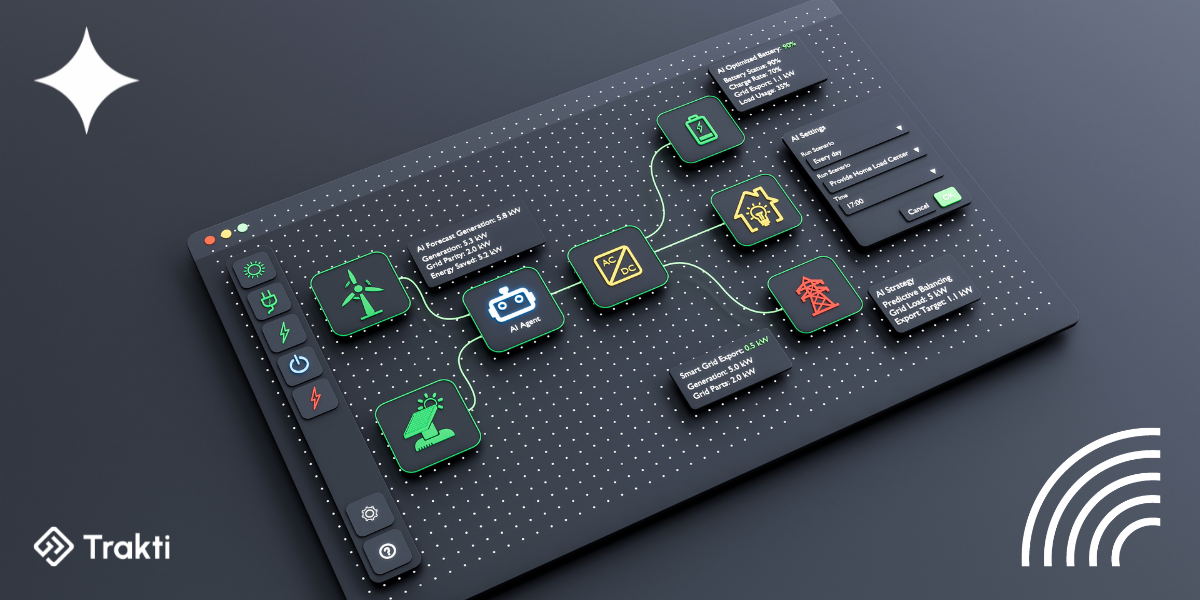
Devices, Internet of Things systems, and AI agents will execute payments autonomously based on contractual parameters.
Why it matters: this automates supply chains, energy systems, mobility, and industrial services.
Trakti smart legal contracts define rules, limits, and payment conditions, enabling a secure and verifiable machine to machine economy.
8. Regulated digital finance including CBDCs, stablecoins, and electronic KYC
Central banks and regulators are accelerating toward digital currencies and compliance by design systems.
Why it matters: this enables more efficient, lower cost, and fully traceable payments.
Trakti smart legal contracts can embed compliance rules, KYC, and AML requirements, ensuring that every payment is compliant before it is executed.
9. AI driven intelligent payments
Artificial intelligence is entering every phase of the payment lifecycle, including fraud prevention, scoring, decision automation, and flow orchestration.
Why it matters: it improves security, accuracy, and customer experience.
Why Trakti is an enabler: smart legal contracts can interact with AI systems to automatically condition payments on validated events such as delivery, quality, availability, or performance.
10. The fusion of payment and contract through the Pay&Do paradigm
Payment is no longer a separate event from the contract, but an integrated function of the contract itself.
Why it matters: it immediately aligns value, obligations, and accountability, reducing disputes and administrative delays.
Why Trakti is an enabler: the platform is designed for this exact purpose, unifying contractual execution, workflow, tokenization, and payments in a single verifiable, automated, and auditable ecosystem.
Between 2025 and 2026, digital payments will no longer be just a transfer of value, but the output of a programmable, verifiable, and compliant contract.
This is Trakti mission for 2026 and for enterprises: to unify legality, automation, value, and payments in a single all in one platform.
Stay up to date on the latest trends. Subscribe to our newsletter!